Showing posts with label Vision. Show all posts

Wednesday, 11 September 2019

JUNIPER PUBLISHERS- JOJ Ophthalmology

Prevalence of Myopia among Senior High School Students in the Kumasi Metropolis-Juniper Publishers

Abstract

The study aimed at determining the prevalence of myopia, the age and gender distribution of myopia, and the number of students who show symptoms of myopia in Senior High School students in the Kumasi metropolis.
Method: A total of 662 students aged 14-20 years were randomly screened from12 different Senior High schools in this descriptive cross-sectional study. Data were collected through interviewer - administered questionnaires, ophthalmic examination and refraction. Myopia was defined as the best vision sphere ≥-0.25DS.
Results: The study revealed a myopia prevalence of 25.08% (14.20%infemales) and a mean myopia of -2.72±0.21DS (-2.84±0.18DS for females) among these students. Majority of the myopic cases (66.26%) were found in ages 16 and 17. Myopia was positively correlated with blurred distance vision (r=0.504, p<0.05).
Conclusion: The study revealed significant prevalence of myopia which may continually increase if adequate intervention measures are not put in place.
Keywords: Myopia; Prevalence; Squint; Vision; Error


Introduction

Myopia is a form of ametropia or refractive error in which parallel light rays from an object at optical infinity are focused by the refractive media of the eye to a focus in front of the retina, with accommodation fully relaxed [1]. Myopes have blurred distance vision but the object becomes clearer as it gets closer. Myopes squint (thus slightly close their eye so reduce palpebral aperture) for distance object in order to create a pinhole effect there by reducing spherical aberrations to create clearer image. Some common symptoms include: blurred distant vision, squinting, nausea and fatigue. Patients with myopia are more at risk of developing retinal detachment, primary open angle glaucoma, chorioretinal atrophy, lacquer cracks, (sub capsular, cortical and nuclear) cataract and myopic macular degeneration than patients with hyperopia [2-8] cause and therefore may be considered to be a multi factorial in origin [9]. Among many risk factors associated with myopia, doing a substantial amount of near work on a regular basis also increase the risk for myopia. Myopia is associated with greater times pen treading and doing near work, more years of education, better reading test scores, occupations that require a great deal of near work and greater academic ability [10-13]. The problem of myopia is often discovered in school-age children who report having trouble
seeing the chalkboard. Myopia becomes progressively worse through adolescence and stabilizes in early adulthood. In fants are mostly born hyperopic and they become less so with the approach towards ametropia [9]. It has been reported that the prevalence of myopia is heightening in both developed and developing countries [14,15]. In school-age and young adult, the prevalence of myopia is estimated to be 20-25% in the mid to late teen age population and 25-35% in young adults in the United States and developed countries [16,17]. In developed countries, screening of eyes in school children is done routinely. Eye services are easily accessible, and the majority of children with eye problems consult them without requiring referral by other health professionals [18]. In Ghana like other developing countries, there is no established vision screening program for students on commencement of school, such that those with early onset of such errors will have many years of poor vision. Moreover, it is often difficult to provide an efficient refraction service for a variety of reasons including lack of awareness about the prevalence and public health importance of eye diseases and most importantly recognition of refractive error as a correctable cause of visual impairment in students, compounded by the non-availability of affordable services. The proportion of children who are blind or visually impaired due to refractive errors (with myopia being the most prevalent) can be used to assess the level of development of eye care services in a country [19-21].
Despite the fact that myopia is such serious problem, only a few papers have been published so far on the prevalence of myopia among school children in Ghana [22-24] as well as hospital based research [25-27]. All these publications report significant prevalence of hyperopia and show a growing need to tackle this problem. The study aimed at determining the prevalence of myopia, the number of students who show symptoms of myopia and the age and gender distribution of myopia in Senior High School students with in the Kumasi metropolis.


Methods

Study design and participant selection

A descriptive cross-sectional study was adopted in for this population survey to determine the prevalence of myopia in Senior High school students in the Kumasi metropolis. Twelve (12) Senior High schools (5 mixed schools, 3boys’ schools and 4girls ’schools) were randomly selected among all Senior High Schools in the Kumasi metropolis. A total of 662 study subjects, out of the 731 students who returned their signed informed consents, were present on the days of screening and participated in the study. The students and principals of these selected Senior High schools were contacted and informed consent obtained after a detailed explanation of the purpose, content and benefit of the study. The information exchanged between the respondents and there searcher was confidential and were kept as such. Ethical approval was obtained from the Ethics Review Board of the Department of Optometry and Visual Science, Kwame Nkrumah University of Science and Technology, and the study complied with the principles of the Declaration of Helsinki.

Pre-survey stage/pilot project

In a bid to test the adequacy of their search instruments, a pilot study was organized at Kwame Nkrumah University of Science and Technology (KNUST) Senior High School.

Data collection technique

Data were collected by optometry students who were killed in measuring all the parameters of interest while the principal investigator ensured that the testing protocol was adhered to. Prior to the ophthalmic examination, a questionnaire(for patient history) was given to the students to capture demographic information (age, sex, address and telephone number) and also together information about their chief complaint, visual function, date of last eye examination, knowledge of refractive status, spectacle wear, ocular and systemic health as well as the life style of the student. A thorough ophthalmic examination/eye screening was carried out in all the students randomly selected in the selected schools. The screening procedure included the following: Visual acuity measurement, Ophthalmoscopy and subjective refraction. In this study, myopia was defined as the best vision sphere power of ≥-0.25 DS.

Data analysis

The data was analyzed using the Statistical Package for Social Sciences (SPSS Inc., Chicago, Illinois, USA) version 12.0 and Microsoft Excel 2007 (Microsoft, Redmond, Washington, USA) after the data collected had been checked for completeness of answers and accuracy. Associations in the categorical variables were determined using Chi-Square test. Paired t-test was used to assess the difference in myopia between males and females in the study. Pearson correlation was used to assess the relationship between myopia and the reported symptoms. P-value less than 0.05 were considered significant.


Results

Demographics of the study population
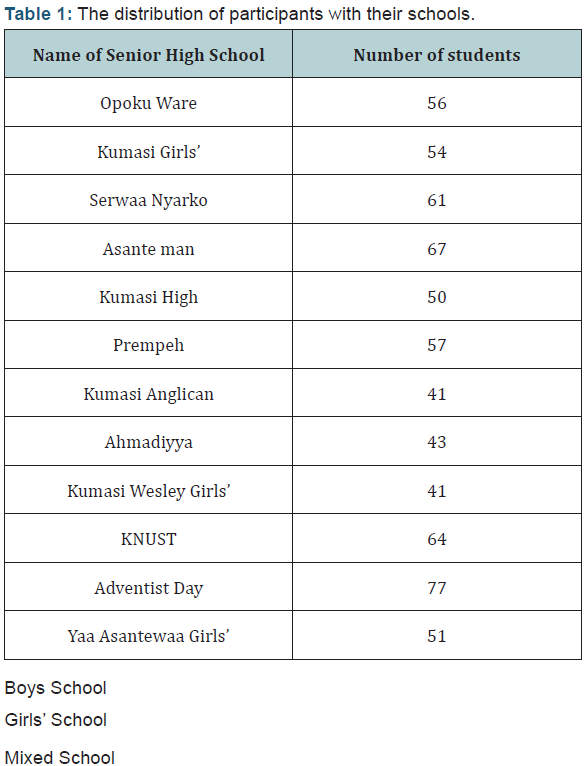
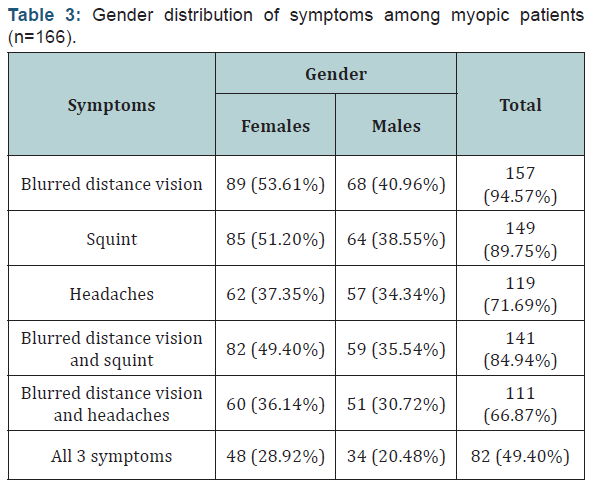
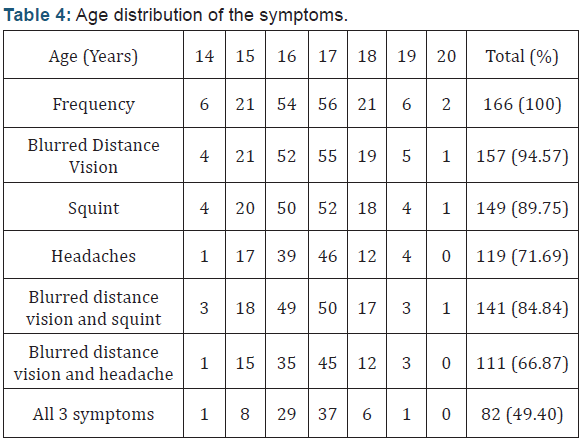
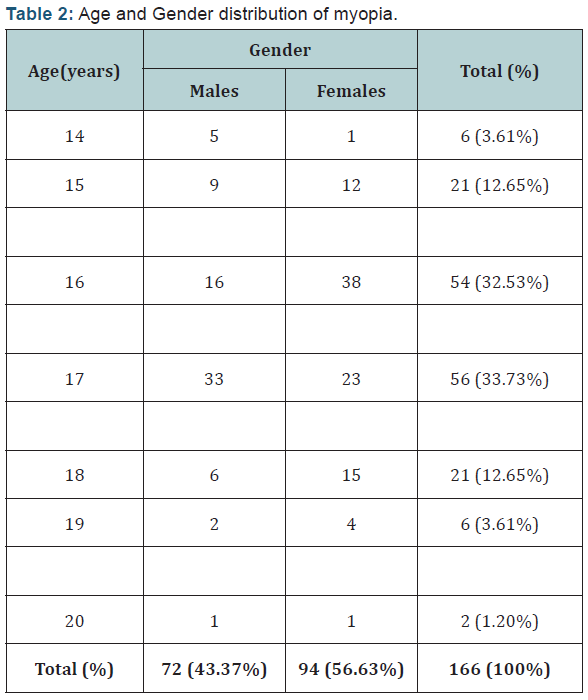
In all, 662 out of the 731 students who submitted their informed consents were screened. The mean age for the study population was 16.16±2.60 years (age range =14 to 20 years, with 376(56.8%) being males). A breakdown of the distribution of the participants with their schools and gender distribution of participants are shown in (Table 1). From this point onwards, results belonging to the myopic population alone were reported. Out of the 662 respondents, 166 had myopia representing a prevalence of 25.08%. 72 (43.37%) of the myopic population were males. The mean myopia found in this study was -2.72±0.21DS (with a range from-0.25DS to -6.00DS). The mean myopia in the male and female myopic groups was -2.60±0.24DS and -2.84±0.18DS. The difference in mean myopia between the male and female groups was not significant (p=0.67). Majority of the myopic cases (66.26%) was found in the ages of 16 and17 years. (Table 2) shows the distribution of myopia by age and gender. (Table 3) shows the distribution of symptoms by gender within the myopic subgroup of the study population. The most frequent symptom was blurred distance vision (n=157, 94.57%). (Table 4) shows the age distribution of certain symptoms recorded from the respondents. The highest frequency of myopic symptoms was recorded for students aged 16 and 17 years.

Discussion

The prevalence of myopia in this study (25.08%) was low compared to 55.7%, 83%, 42% and 68% reported by El-Bayoumey et al. In Cairo, Chenetal. In Taiwan, Goh & Lamin Hong Kong, and Fangrunetal. In Shanghai. [20,28-30]. This confirms studies which have indicated that myopia is more prevalent in Asians than Africans. This high prevalence of myopia among Asians has been attributed to the intensive educational systems that demand more near work from Asian school children [31-33]. Other similar studies in Ghana compared to this study reported lower prevalence of myopia. This could probably be due to the definition of myopia in those studies (≥-0.50DS compared to ≥-0.25DS in the current study) and the different populations studied [22-24]. On the other hand, the prevalence of myopia in this study was higher than that among secondary school students in Mwanzacity, Tanzania which reported a prevalence of 5.6% [34]. Studies have found equivocal results regarding the difference in the prevalence of myopia among males and females [9,22,27,35,36]. In this study, there was no significant difference in the prevalence of myopia between the males and females (p>0.05).The mean myopia in females was slightly higher than that of the males. However, the difference in mean myopia between the male and female groups was not significant (p=0.67). Kumah reported a lower percentage of myopia among boys in Atwima the Ashanti region of Ghana [22]. Reasons given to account for this were that, females grow rapidly than males and also tend to read and write more than males. The subsequent increase in near work predisposes them to myopia development as seen in you then set myopia [9]. Koomson et al. [27] reported a higher prevalence estimate in males than in females. There reason given was that, sex-related difference of myopia is not certain but could be due to the relative differences in response to health seeking behavior. Also, it could be that males do more jobs requiring corrected myopia than females.
A total of 94.57% of the myopic respondents complained of blurred distance vision while 71.69% complained of headaches. The difference in symptoms reported between the males and females was not significant for each of the symptom category (p>0.05). Pearson’s correlation revealed a positive significant association between myopia and blurred distance vision (r=0.504, p<0.05). There was no correlation between myopia and all the other symptom categories (p>0.05). The complaint of headache is not usually associated with true myopic patients with the exception of pseudomyopia and some forms of induced myopia. If as asthenopia is present in a patient with myopia, it is usually due to some other cause, such as astigmatism, anisometropia, an accommodative dysfunction, or a vergence disorder, thus headache is not pathognomonic of pure myopia [37]. There was a significant difference of myopia occurrence among the age groups, similar to what was reported by Kumah in 2007 (p<0.05) [22]. In this study, the students between the 15 to18 year brackets had the highest prevalence of myopia (91.56%), of which 32.53% and 33.73% were 16 and 17 years respectively. This was so because the majority of the respondents were16and17 years, which was comparable to other studies. Apart from myopia being inherited, students tend to do more extensive near work like reading textbooks, watching TV, playing video games, browsing the net, among others, due to the socio economic growth and changes. This has contributed to the increase in the prevalence in these ages. Most of respondents (80%) were not aware of their refractive status. This was probably due to the fact that most of them had not taken an eye examination before, a common occurrence among developing countries [38]. This is similar to low proportions of students who have had eye examinations before in several studies conducted in most developing countries in Africa [23,24,28,34,39]. For the few who had spectacle corrections (2%), most of them were reluctant in using their corrections for they wanted to be accepted by their peers and also for some perceived probable side effects associated with lens wear. For instance, some people don’t appreciate their appearanceing lasses and they think it detracts from their facial aesthetics or hides their features [40].


Conclusion

This study has revealed a significant prevalence of myopia among senior high school students in the Kumasi metropolis. It is likely that both the rate and severity of myopia will increase as a result of the rapid socio economic growth of Kumasi and Ghana as a whole, if the needed efforts are not taken to put its progression under control. Myopia is considered as one of the important medical, social and public health issues that need to be addressed in Kumasi and other regions in Ghana. Were commend that a policy be put up by the Ghana Education Service which will allow the inclusion of pre-school and a routine in-school eye screening for all levels of education. Through the school health education programmers of the Ghana education service, students, teachers and the communities should be educated on the importance of ocular health. They should be trained to identify the different refractive states of the eye, especially myopia; its signs, symptoms and complications so that they can report to the appropriate quarters for the appropriate assessment and management.


Acknowledgement

We would like to acknowledge the principals of the selected Senior High School in the Kumasi Metropolis for their support in providing venues during the time of the study.

For more Open Access Journals in Juniper Publishers please click on: https://juniperpublishers.com

Wednesday, 31 July 2019

Ocular Health Assessment of Basic School Children in the Oforikrom Sub- Metropolis, Kumasi-Ghana-Juniper Publishers


Juniper Publishers-Journal of Ophthalmology


Background: Vision is critical for daily activities and sight is treasured by all. Eye diseases and disorders such as uncorrected refractive errors, cataract, glaucoma and retinopathies, tend tomar normal vision.
Purpose: To determine the prevalence of ocular conditions, their association with age and gender and the commonest associated symptoms experienced by the basic school children in the Oforikrom sub-metropolis of the Kumasi Metropolis of Ghana.
Design: A descriptive, cross sectional survey was used.
Methods: Out of the ten sub-metros in Kumasi, simple rando
m technique was used to select a sub-metropolis. The multistage sampling technique was then used to select two public primary schools in the selected sub-metropolis as well as to identify a sample of school children aged 5-16 years. The examination procedures adopted included history-taking, visual acuity testing, plus-one blur test, static retinoscopy, subjective refraction and ophthalmoscopy.
Results: A total of 500 children were examined and refractive error was found to be the most prevalent ocular condition occurring among 200 (40.0%) of the school children, followed by allergic conjunctivitis 111 (22.2%) and dry eyes 51(10.2%). The commonest symptoms recorded include itchiness (38.40%), tearing (32.4%), red eyes (30.20%) and headache (26%).
Conclusion: Uncorrected refractive error was the most prevalent ocular condition and this study indicates that the school age is a high risk group for developing refractive errors. Eye screening of school children is recommended and eye care services, especially, refractive error services should be enforced.
Key words Ocular, Assessment, Vision, Refractive error, Screening, Symptoms, Prevalence

Introduction

Poor vision in childhood affects performance in school or at work and has a negative influence on the future life of a child. Moreover, planning of the youth’s career is very much dependent on visual acuity, especially in jobs for the navy, military, railways and aviation (Gupta et al. [1]; Brown et al. [2]).
Assessment of ocular health in children is important because while some eye conditions are just causes of ocular morbidity, others invariably lead to blindness. Also while some conditions such as refractive errors and cataract are treatable others like measles and vitamin A deficiency are largely preventable. Many ocular diseases have their origin in childhood and the morbidity may go unnoticed in the absence of any form of ocular assessment because unlike adults, children have no effective means of reporting ocular problems (Deshpange et al. [3]). Kamath et al. [4] reported that children do not complain of defective vision, and may not even be aware of the condition. They try adjusting to the problem of defective vision by sitting in the front benches, holding the books close to their eyes, squeezing the eyes.
The school age is a formative period, physically as well as mentally, transforming the child into a promising adult. As such, health habits formed at this age will be carried to adult age, old age and even to the next generation (Kamath et al. [4]). This means that, not only will the child carry the effects of untreated poor ocular health into adulthood, but also ocular hygiene and health seeking behaviors cultivated in childhood as well.
Many ocular diseases from poor ocular health have their origin in childhood and the morbidity may go unnoticed and adversely affect the child’s performance in school and may also cause severe ocular disability in the later part of life (Deshpange et al. [3]). According to Gupta et al. [1], school children are easily accessible and schools are the best forum for imparting health education to the children, and schools are also one of the best centers for effectively implementing the comprehensive eye healthcare program. Ocular health assessment in school children is therefore one of the best modules in early detection and treatment of preventable blindness in children.
Data reported worldwide suggest that there is wide regional variation in the major causes of blindness in children; lesions of the central nervous system predominate in the developed countries and corneal scarring as a result of acquired diseases predominate in poor countries (Rushood et al. [5]).
Good ocular health also ensures that school children can attain their full potential in the course of their education (Deshpange et al. [3]). Periodic screening of school children therefore is very critical to improving the quality of vision in childhood. This goes on to buttress the fact that development of visual screening programs in elementary schools is essential to ensure early detection and treatment of refractive errors and eye disorders.
It has been reported that poor ocular health adversely affect the child’s performance in school and may also cause severe ocular disability in the later part of life (Deshpange et al. [3]). Thus, effective ocular health assessment in early life invariably helps in preventing long-term visual disability. Another issue of concern in poor ocular health in children is the potential of childhood blindness. Childhood blindness affects, not the child alone, but the entire family and many of them are left as street beggars in the poor countries (Khalil et al. [6]). Poor ocular health in children affects childhood development, educational performance as well as social and employment opportunities (Prakash et al. [7]).
The purpose of this study is to determine the prevalence of eye diseases, their association with age and gender and the commonest associated symptoms among basic school children in the Oforikrom sub-metropolis of the Kumasi Metropolis of Ghana.

Material and Methods

Study area
The study was carried out in the Kumasi Metropolis in the Ashanti Region of Ghana. Kumasi has a population of 2,035,064(http://www.statsghana.gov.gh/).It is located in the transitional forest zone of Ghana and lies between latitude 6.35° – 6.40° and longitude 1.30° –1.35°, an elevation which ranges between 250 – 300 meters above sea level. The land area of the Metropolis is about 254sq/km and approximately 10 kilometers in radius. There are 119 communities and ten (10) sub-metropolitan areas which include Oforikrom, Asawase, Asokwa, Bantama, Kwadaso, Manhyia, Nhyiaeso, Subin, Suame, Tafo-Pankrono (http://kma.ghanadistricts.gov.gh/).
Study type and design
A descriptive, cross-sectional study was undertaken. A sample size of 500 basic school children aged 5 to 16 years in the Kumasi Metropolis. Out of the ten sub-metros in Kumasi, simple random technique was used to select one sub-metro. The multistage sampling technique was then used to select two primary schools in the selected sub-metropolis.
Data collection technique
Data collection took place over a period of two weeks. Consent forms were initially sent to parents/guardians of the basic school children of the selected schools to be signed and approved before thorough ocular examination took place. These were however preceded by acquiring the patient’s biodata and a comprehensive case history through questionnaires which were being filled by themselves or by aid. The ocular examination procedure was as follows:
Visual Acuity
Unaided visual acuity measurements were taken for each eye of the study participants, reading from either the Snellen letter chart or the Snellen “E” chart. Aided visual acuity was taken when a participant presented with a spectacle correction. Pinhole acuity was measured in patients whose visual acuities were found to be worse than 6/6. Improvement of the patient’s visual acuity with the pinhole, the cause of the reduction in vision could be said to be mainly refractive in nature and the maximum improvement in the vision could be attained by the use of lenses to correct errors of refraction (Renner [10]).
Refraction
Staticretinoscopy and Subjective refraction were undertaken for all the subjects whose visual acuity improved with the pinhole. Also subjects with an uncorrected visual acuity of 6/6 were considered emmetropic after passing the +1 Blur test. Subjects with an error of +/- 0.25 or more were considered ametropic.
External examination and funduscopy
Examination of the external eye including the eyelashes, lids, cornea, conjunctiva, iris and pupil and of the fundus using the pen torch/ophthalmoscope light and the direct ophthalmoscope were undertaken respectively.
Ethical Consideration
This research was conducted with approval from the Director of the Kumasi Metropolitan Education Directorate, the heads of the selected junior and senior high schools, and from the teachers
Data Analysis
The Epi Info software, version 3.5.1 was used to analyze the data.

Results

A total of five hundred (500) pupils sampled from the study area responded to the questionnaires. The socio-demographic characteristics considered include gender, age, age group, school, stage/ educational status, Visual acuity, symptoms, and diagnosis were also included (Table 1).
From the Table 1, 241 pupils were females and 259 were males representing 48.2% and 51.8% respectively. The age range for the study sample was from 5 to 16 years. The mean and modal ages were 10.07±2.58 years and 8 years respectively (Table 2-7).

Discussion

Prevalent Ocular Conditions
From this study, refractive error (40.0%), allergic conjunctivitis (22.2%) and dry eyes (10.2%) have been indicated to be the major eye conditions among the respondents. In a study by Ajaiyeoba et al. [11] conducted on a total of 1,144 students, the major ocular disorders encountered were Allergic/vernal conjunctivitis (7.4%), Refractive error (5.8%), lid disorders (0.6%), squint (0.3%), corneal scarring (0.3%),cataract (0.2%). Adegbehingbe et al. [12] reported common ocular conditions as follows: refractive error, 13.5%, infective conjunctivitis, 6.1%, chalazion, 6.1% and squint, 5.9%.In the vision-screening project conducted by Presian et al. [13] at Baltimore, the estimated prevalence of visual morbidity was found to be 3.9%, 3.1% and 8.2% for amblyopia, strabismus and refractive errors respectively.
Prevalence of Refractive Errors
The commonest ocular condition identified in the present study was refractive error. This was consistent with the findings of Adegbehingbe et al. [12] and Presian et al. [13]. The refractive error prevalence (40.0%) comprised 32.6% hyperopia, 7.2% myopia and 0.2% astigmatism. The prevalence of hyperopia, myopia and astigmatism among the study sample were 4.6%, 6.9% and 14.1% respectively. Refractive error was defined in the present study as an error of ± 0.50 D and above for hyperopia and myopia and a cylindrical error of ≥ 0.50 D in one or both eyes, as was similarly defined in a study by Niroula et al. [14]. Hyperopia was the most prevalent refractive error observed in the study (32.6%). Previous studies among different ethnic groups have revealed myopia as the most prevalent refractive error (Shrestha et al. [15]; Al Wadaani et al. [16]). Therefore, prevalence of the different types of refractive errors differs for different ethnic backgrounds.
Ocular Conditions and Gender
From the present study, prevalence rate of refractive error was not statistically associated with gender (p=0.63520). Females had a higher refractive error prevalence rate (20.6%) than males (19.4%). Hyperopia, myopia and astigmatism were found to be higher among females than males (p values of 0.45257, 0.69101 and 0.97124 respectively). Previous studies conducted in other countries confirmed this relationship between females and higher Refractive error prevalence (Al Rowaily et al. [17]; Al Wadaani et al. [16] and Pavithra et al. [18]). Niroula et al. [14] however, found the percentage of refractive errors to be more in boys (7.59%) than in girls (5.30%). However, a study conducted among Nepalese children found no sex difference (Pokharel et al. [19]). The higher prevalence of refractive error among females could be due to the fact that women’s eyes have a shorter axial length than their male counterparts. A study by Foster et al. [20] in which mean anterior chamber depth measured in women was more shallow than in men of all ages (ANOVA, P< .0001) predisposes them to hyperopia (leading to higher prevalence of refractive error).
A statistically significant (p=0.00257) difference was observed between females (13.6%) and males (8.6%) when the prevalence rate of allergic conjunctivitis of both genders wereA statistically significant (p=0.00257) difference was observed between females (13.6%) and males (8.6%) when the prevalence rate of allergic conjunctivitis of both genders were compared. The higher prevalence rate in the females could be attributed to the fact that Ghanaian female school children are exposed to a lot of allergens in the environment than males, as they are mostly responsible for activities such as sweeping and dusting of tables and chairs in schools and at home. The rest of the ocular conditions showed no significant variation with gender
Ocular Conditions and Age
From the study, there was no significant association between the various types of refractive error and age. This was consistent with the finding of Pavithra et al. [18]. Of all the ocular conditions presented, only dry eye had a significant positive correlation with age (p=0.00255) in this study. The positive correlation could be from the fact that, academic activities such as attentive reading increases with rise in class level (which is highly dependent on age in Ghanaian primary schools).
According to Karson et al. [21], the rate of blinking when reading has been shown to decrease significantly from a resting blink rate of between 8 and 21 blinks per minute to an average of 4.5 blinks per minute. Hence the eyes are prone to getting dry as one age, moves higher in class level and do a lot of attentive reading.
Ocular Symptoms
Amongst the commonest symptoms recorded in this study, 38.40% reported itchiness, 32.4% had tearing, 30.20% had red eyes and 26% had headache. The high prevalence of these symptoms could be attributed to allergens such as dust and chalk particles in the school environment to which the school children are exposed to. Children have strong immune systems such that, they easily have hypersensitivity reactions to things in their environment. The high reportage of headache as a symptom could be attributed to the high prevalence of hyperopia within the study population. Gleason et al. [22] have stated that hyperopes must accommodate to see distant objects clearly and even more so to see closely. According to Grosvenor [23], Sheard’s criterion must be met for comfortable binocular vision. When this is not met, asthenopic symptoms which includes headache will result. This explains why most of the subjects reported experiencing headaches. Similar findings were obtained in a cross sectional study by Ajaiyeoba et al. [11].

Conclusion

Refractive error was found to be the most prevalent ocular condition among the basic school children in the Kumasi Metropolis affecting 200 (40.0%) pupils out of a sample of 500, followed by allergic conjunctivitis 111 (22.2%) and dry eyes 51 (10.2%). Amongst the commonest symptoms recorded in the research, 38.40% reported itchiness, 32.4% had tearing, 30.20% had red eyes and 26% had headache.
The ocular diseases showed no significant variation with gender apart from allergic conjunctivitis which had a statistically significant difference between females (13.6%) and males (8.6%) (p=0.00257). There was also no significant association between eye disease and age except in the case of dry eye that had a significant positive correlation with age (p=0.00255).
School health services should have eye care services incorporated, implemented and strengthened effectively. Routine eye screening and examination among school children, especially those below the age of 9 years, should be enforced as any unidentified eye disorder could easily result in amblyopia. Provision of affordable corrective services should follow screening, especially, to the school-age group.

# Table 1: Age and Gender distribution of respondents.

# Table 2: Visual acuity of respondents.

# Table 3: Prevalence of Ocular conditions.

# Table 4: Distribution of refractive state by Gender.

# Table 5: Prevalence of common ocular symptoms.

# Table 6: Distribution of Respondents’ Gender and Eye Disease.

# Table 7: Linear Regression model showing the distribution of Respondents’ Age and Ocular conditions

For more Open Access Journals in Juniper Publishers please click on: https://juniperpublishers.com